Showing posts with label kernel essay. Show all posts

Thursday, August 7, 2014

Elementary invades Secondary

Elementary vs. Secondary

The gap between elementary and secondary isn't just middle school. For the most part, secondary teachers stay away from elementary teachers. Just walk into their respective classrooms and you'll see one reason why.
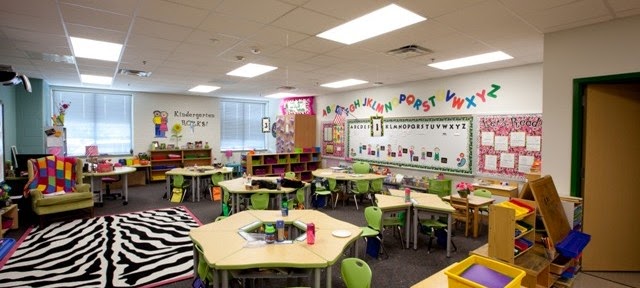
AHHHH!! MY EYES!!

Peaceful, zen, orderly... much better

And there are other reasons: their enthusiastic demeanor, endless optimism, tolerance for bodily secretions. I'm sure our sharp sarcasm, minimalistic classrooms, and constant complaints about having over a hundred kids instead of twenty-five don't do well to bridge the gap between our worlds. 

However, I don't want to discount everything they do in their classes as "little kid" stuff that would never work in my "big kid" class. After all, their little kids are still living inside every one (of my 157) kids sitting in my stark, white classroom. 

My Adventure with the Dangerous Game

I thought I'd try out one of the most famous aspects of elementary school: centers (dun-dun-duuuuunnnnnn). The first thing I realized on my road to creating centers (after I thought about how I have no space to let kids mingle about in my sardine can of a room) was they are A LOT of work. Seriously! How does any one person plan center after center throughout the year? That endless optimism must come in handy for them because geez! 

But, after I did the work I didn't have to do ANY. THING. ELSE. I just released the hounds students and they began chiseling away at their work. Sure, I had to help when we switched stations to ensure no one got lost along the way, and there were some that didn't understand the directions here and there, but for the most part they kids helped each other while I sat back and watched the magic happen. Then I thought, no wonder elementary teachers do this. It's like putting on a movie (that you made) and letting them sit and watch it. 

Get it here.
I plan to use more centers this year, and I'm going to start my year with this one I made for Richard Connell's "The Most Dangerous Game." I am going to make a few changes this year. Last year, we read the story without stopping to talk about anything. Just plowed right on through. As an English teacher that was hard, but the point is to let the students discover meaning on their own, not spoon-feed it to them, so leave your spoons at home. After reading, I gave the students numbers 1-9. Whichever number they got, that's where they began. We did three centers per day, but that wasn't really enough time for the kids to finish each station so I have a lot of them in tutoring to get done. This year, I'll probably do two centers per day. It doesn't matter what order the centers are done in either. At the end, they turn in every paper with a silhouette of an island on the bottom. It's that easy. And the grading wasn't too bad either. 

The best thing I learned from doing centers was that I shouldn't stay away from those bubbly elementary teachers. They could have just the thing my classroom is missing. And I don't mean thousands of colors. 

Happy teaching!

Tuesday, July 15, 2014

Writing Strategies Galore


Look at all those tabs!
Last week I had the pleasure of going to a two-day seminar with Gretchen Bernabei. I can't even begin to explain how much I learned in twelves hours. True, most of the things we talked about were things I already teach, but the strategy to teach those things made me wonder how I didn't think of that in the first place. By the end of the seminar, I had a composition notebook full of stuff to take back to my classroom.


Here are a few of my favorite:

The Kernel Essay

Kernel: tiny yellow seed with the potential for yummy, buttery goodness when microwaved. 

Writing kernels are the same minus the butter and microwave. However, they can still be yummy. Sometimes. They are made up of four sentences that become the structure of the essay. 

Here's mine for the prompt "Write an essay about your favorite place" or something like that:


I have used this strategy in class in the past and the kids really latch on and get it. I am going to amp it up this year though. Also, this can be done with any type of writing, expository, narrative, or procedural.

You can go here to see a HUGE list of possible structures kids could use when writing kernels. Or, they could come up with their own. 

Expository vs. Narrative

When we did this together, I nearly face palmed myself. It's so simple and clear that I don't know why this isn't how we all show the difference between writing modes. It also employs our advice of "show not tell." My problem before was always just TELLING them the difference. Then, when I read essays, I would be so frustrated because I would be reading stories instead of essays. Then, I'd tell them again. Rinse and repeat. But this simple T-chart SHOWS instead of TELLS.

Before we did the chart, we chose an object from our childhood to write about. I chose a little stick man made of toothpicks that I used to decorate my Dad's "Over the Hill" cake when he turned 40.

Now, draw a T-chart like this:


We then wrote for two minutes. First on the left side, then on the right. Here's what I came up with:

I didn't finish, but you still get the idea. 
And, BOOM! There's the difference. The kids can actually see the difference in front of them. Then we took those short paragraphs and wrote kernel essays on note cards. 

Here are mine:


Gretchen then took them up and read them aloud having us guess which one was narrative and which was expository. So, the practice could continue from this one activity.


Expository


Narrative 

Pitchforking

Again, an oldy, but a goody. This strategy gives kids a more direct way to add detail to their writing. Take this sentence for instance: We baked a cake. Not terrible, but not great either. It offers so little explanation of my experience baking a cake, that you as the reader have to imagine a time when you baked a cake just to stay interested. That equals not good writing. That's where pitchforking comes in. 

Here's what my paper looked like at the end of this activity just for ONE SENTENCE!

I turned "We baked a cake" into "We laughed, decorated and sweated in the hot kitchen as we baked Dad's birthday cake, a moist, delicious reminder he was over the hill." Ummm.... wow!!

Just imagine if we could get our kids to pour over one sentence like that! But after a lot of practice, this strategy won't be a strategy anymore, it will just become natural.The great writers sitting in my classroom do this naturally, so hoping for that for the struggling writers isn't beyond our reach. 

These strategies only skim the surface of what I learned. For more, you can visit Gretchen's blog. A word of warning: combing through all the strategies there might take hours. So, make sure the kids are fed, all water facets are off, and there's no laundry to do in the near future.