Thursday, August 21, 2014

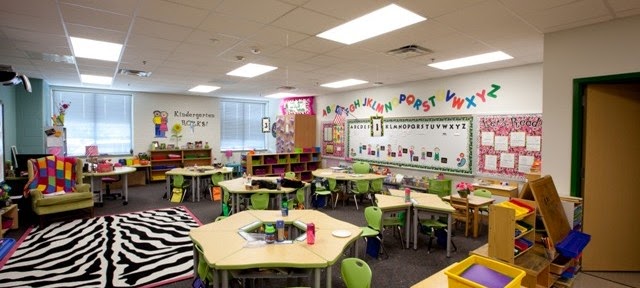
Everything is so SHINY!!

This year I am so lucky to be able to move into a brand. new. school. Can I get a WHAT WHAT!! In my almost nine years of teaching, I've had the opportunity to do this two other times. BUT, each time I ended up leaving the school right before it opened. This time I was staying put. NOTHING and NO ONE could pry my fingers away from this school this time.

Genius


My favorite part of teaching is getting my room ready and for the last three years, I haven't had a chance to do diddly squat because I wasn't moving rooms. So, this time, I took all my previous experience and built my perfect classroom. The best part is I actually had room to do everything I wanted.

The first is a dedicated turn in station away from my desk. It has a place for papers as well as buckets for when the students turn in their composition notebooks.

Most excellent

Then, of course I had to have a place for my rules. You can get these rule memes here. And, I love to sew. SOOO... if there are bare windows, I am all over it. 


Informative, yet still funny.

Moving on, we have a GIANT wall that I really didn't know what to do with. I had hoped they would just put another white board up and call it a day, but now I'm so thankful they left it blank. I have my Writing Icons wall that we will add to all year and a place for storing notebooks.


I made those shelves from crates I found at Wal-Mart. I had the stain and paint at home already. I didn't have enough of either to do all the crates, and I'm glad for that. The two-tones together looks very sophisticated if I do say so myself.

My agenda board is the only thing that I brought over from my old school. The letter are dicuts that I laminated. I don't think I'd be able to live without my giant agenda.

On the way out the door, we have my cell phone station. My principal (aka Mrs. Principal) bought these for us this year because we are doing a BYOD pilot program. During tests and on days when having their phone is a no-no, the student can turn them in to a neutral location and take the numbered card. Mrs. Principal stressed that the holders are clear so the students can glance over and see that their lifeblood hasn't been harmed.


The desks here are different from anything I've ever had before. First of all they kind of link together to make a flat table which is great because I use a lot of group activities.


Each group has a little tool box of assorting things like glue, crayons, colored pencils, highlighters and sticky notes. Of course, I have freshmen, so I had to give them a little warning.


Finally, the class points wall. It's much more colorful than it has been in the past. This system has helped me so much in the years I've used it. My kids actually compete to be the best behaved class when there's a sub. If that's all it got me, then I'll take it.

Then, there's this. A classroom must have. 

The excitement is tangible as I walk down the hallways of my new school. I feel like a first year teacher again. I can't wait for Monday!


Thursday, August 7, 2014

Elementary invades Secondary

Elementary vs. Secondary

The gap between elementary and secondary isn't just middle school. For the most part, secondary teachers stay away from elementary teachers. Just walk into their respective classrooms and you'll see one reason why.

AHHHH!! MY EYES!!

Peaceful, zen, orderly... much better

And there are other reasons: their enthusiastic demeanor, endless optimism, tolerance for bodily secretions. I'm sure our sharp sarcasm, minimalistic classrooms, and constant complaints about having over a hundred kids instead of twenty-five don't do well to bridge the gap between our worlds. 

However, I don't want to discount everything they do in their classes as "little kid" stuff that would never work in my "big kid" class. After all, their little kids are still living inside every one (of my 157) kids sitting in my stark, white classroom. 

My Adventure with the Dangerous Game

I thought I'd try out one of the most famous aspects of elementary school: centers (dun-dun-duuuuunnnnnn). The first thing I realized on my road to creating centers (after I thought about how I have no space to let kids mingle about in my sardine can of a room) was they are A LOT of work. Seriously! How does any one person plan center after center throughout the year? That endless optimism must come in handy for them because geez! 

But, after I did the work I didn't have to do ANY. THING. ELSE. I just released the hounds students and they began chiseling away at their work. Sure, I had to help when we switched stations to ensure no one got lost along the way, and there were some that didn't understand the directions here and there, but for the most part they kids helped each other while I sat back and watched the magic happen. Then I thought, no wonder elementary teachers do this. It's like putting on a movie (that you made) and letting them sit and watch it. 

Get it here.
I plan to use more centers this year, and I'm going to start my year with this one I made for Richard Connell's "The Most Dangerous Game." I am going to make a few changes this year. Last year, we read the story without stopping to talk about anything. Just plowed right on through. As an English teacher that was hard, but the point is to let the students discover meaning on their own, not spoon-feed it to them, so leave your spoons at home. After reading, I gave the students numbers 1-9. Whichever number they got, that's where they began. We did three centers per day, but that wasn't really enough time for the kids to finish each station so I have a lot of them in tutoring to get done. This year, I'll probably do two centers per day. It doesn't matter what order the centers are done in either. At the end, they turn in every paper with a silhouette of an island on the bottom. It's that easy. And the grading wasn't too bad either. 

The best thing I learned from doing centers was that I shouldn't stay away from those bubbly elementary teachers. They could have just the thing my classroom is missing. And I don't mean thousands of colors. 

Happy teaching!

Sunday, August 3, 2014

Expository: Fight the Boring

It doesn't have to be painful...

I have a confession to make. I hate reading expository texts. There, I said it. Unfortunately, Texas has decided that expository is the mother of all writing. So, here I am a few weeks away from the beginning of school and I am thinking about the one thing I hate the most. 

What is it about expository that makes it so awful uninteresting to me? I mean, I really like watching documentaries, the news, listening to NPR. All of those are expository texts. Non-fiction and informational. All the things I say I don't like. But I can't get enough. I am such a news junkie that my two year old asks to watch the news instead of cartoons. So, it can't be the "entertainment value" that turns me off to cracking open an article and reading it. It must be something else. 

I went to my thinking spot and thought, thought, thought, and I realized. I just don't like teaching non-fiction. Usually when faced with teaching an article, I don't know what to do beyond read it and talk about it. How boring for everyone involved in the process of learning. 

Proposed Solution

First, I have to chose expository texts that are high interest. The internet will help me out with that I'm sure. I used one last year about the Shia and Sunnis using Romeo and Juliet to change Iraq (It's FREE). The kids really liked it. But I didn't do a great job of teaching the article. At the end of the unit, I patted myself on the back for working non-fiction in to the Romeo and Juliet unit, but I could totally do better. 

Secondly, I need a WAY of teaching the text that allows the students to take ownership of what they are reading and eventually turn reading into writing. Easier said than done, I know. But I created this graphic organizer as a start. It can be used with any expository text. And I think it can be used in elementary, middle, and secondary classrooms. So far, it's a step in the right direction. 

In conclusion

Step 1: high interest texts
Step 2: a guide to analyzing the high interest text that leads to writing

Let me know how you integrate non-fiction articles in your curriculum and what you use to do it. 

Until then, happy teaching!!

Wednesday, July 23, 2014

Using Memes: Classroom Rules Edition

Hilarious. Ubiquitous. Perfection. 


Memes are fascinating for some unexplainable reason. I Other people spend hours combing through the interweb to find funnier and better memes. That's why there are about 17,000 different meme generators out there. 

I wanted to try them out and I thought what better way to use memes in my classroom than with the silly rules I make up each each year. So, I hopped on to a meme generator and in about ten minutes I had nine perfect memes. There was only one problem. I couldn't print them out because the images were just too little. I did some more googling, found another meme maker to no avail. There is nothing out there that just pops out memes in high resolution for teachers to print out. (WHY NOT INTERNET??) I thought about buying them, but then I would have to buy less for two reasons: #1 I don't have the wall space for nine posters, and remember how I'm a teacher? #2 I don't have the pocketbook for that kind of project.  

I had to take another road. My ten minute project turned into a four hour monster of a task, but I did it. I will save you the drama and heartache I had to undergo and skip to the "It is finished" part. 

Here are a few of my masterpieces:


Not too shabby, if I do say so myself. (And I do.) If you want all of the images, you can purchase them here as pdf files. There are rules for talking, make up work, texting, lining up at the door (we don't do that because we are in high school), tardiness, name on paper, cheating, participating, and extra credit. I know what you are thinking: that's so many rules... what would Harry Wong say? I would say, Mr. Wong, they are cute and funny and totes adorbs, so I can have nine. 


If you'd rather make your own... then I wish you all the luck in the world. Just a quick note: a glass of wine might be a good idea.   

Happy teaching!!

Wednesday, July 16, 2014

Teach Romeo & Juliet with Concepts Over Content

We Need Change

If you don't already know the purpose of this blog, you can read about it here. However, the short of it is the English classroom needs a revolution. The heart of the uprising should be accepting we need to teach concepts instead of covering content. This idea isn't completely radical. I mean, the Chinese have been saying it for centuries: "Give a man a fish and you feed him for a day; teach a man how to fish and you feed him for a lifetime." 

I know we aren't dealing in fish, but learning works the same way. Covering content is doing all the fishing for our students. We need to start teaching them how to fish for themselves. 

The First Step

Weaning ourselves off of reading every word of all the great literature available to us will be hard, I know. But, we can start small. I got started by skipping a chapter in Animal Farm in order to free up some time to practice more writing. And you know what? No kids were harmed in the process, no lighting bolts were thrown, my colleagues didn't pick up pitchforks and run me out of town. Somehow, it just worked. 

That experience gave me confidence to start chopping away at Romeo and Juliet. The first year, it began with small pieces. The scenes with the servants went first. Then a section from the Nurse babbling away endlessly, then parts of Queen Mab. And now, after four years of chipping away, I'm left with the best parts to teach symbolism, theme, expository structure, inference and so much more. These are skills the students can use on other Shakespeare plays or even sonnets. 

The Best Part


When you are ready, or if you already have made the leap to teaching concepts over content, you can find my one month long unit here or if you just want to try it out, here is the lesson just for the Prologue. I understand if you aren't ready to give up on every word of Shakespeare's beautiful language, but after going through this unit, my student's developed an appreciation instead of an aversion to Shakespeare. His name was no longer a curse word that incurred hissing when spoken aloud. You can find other lessons I did with Romeo and Juliet here.


Happy teaching!

Tuesday, July 15, 2014

Writing Strategies Galore


Look at all those tabs!
Last week I had the pleasure of going to a two-day seminar with Gretchen Bernabei. I can't even begin to explain how much I learned in twelves hours. True, most of the things we talked about were things I already teach, but the strategy to teach those things made me wonder how I didn't think of that in the first place. By the end of the seminar, I had a composition notebook full of stuff to take back to my classroom.


Here are a few of my favorite:

The Kernel Essay

Kernel: tiny yellow seed with the potential for yummy, buttery goodness when microwaved. 

Writing kernels are the same minus the butter and microwave. However, they can still be yummy. Sometimes. They are made up of four sentences that become the structure of the essay. 

Here's mine for the prompt "Write an essay about your favorite place" or something like that:


I have used this strategy in class in the past and the kids really latch on and get it. I am going to amp it up this year though. Also, this can be done with any type of writing, expository, narrative, or procedural.

You can go here to see a HUGE list of possible structures kids could use when writing kernels. Or, they could come up with their own. 

Expository vs. Narrative

When we did this together, I nearly face palmed myself. It's so simple and clear that I don't know why this isn't how we all show the difference between writing modes. It also employs our advice of "show not tell." My problem before was always just TELLING them the difference. Then, when I read essays, I would be so frustrated because I would be reading stories instead of essays. Then, I'd tell them again. Rinse and repeat. But this simple T-chart SHOWS instead of TELLS.

Before we did the chart, we chose an object from our childhood to write about. I chose a little stick man made of toothpicks that I used to decorate my Dad's "Over the Hill" cake when he turned 40.

Now, draw a T-chart like this:


We then wrote for two minutes. First on the left side, then on the right. Here's what I came up with:

I didn't finish, but you still get the idea. 
And, BOOM! There's the difference. The kids can actually see the difference in front of them. Then we took those short paragraphs and wrote kernel essays on note cards. 

Here are mine:


Gretchen then took them up and read them aloud having us guess which one was narrative and which was expository. So, the practice could continue from this one activity.


Expository


Narrative 

Pitchforking

Again, an oldy, but a goody. This strategy gives kids a more direct way to add detail to their writing. Take this sentence for instance: We baked a cake. Not terrible, but not great either. It offers so little explanation of my experience baking a cake, that you as the reader have to imagine a time when you baked a cake just to stay interested. That equals not good writing. That's where pitchforking comes in. 

Here's what my paper looked like at the end of this activity just for ONE SENTENCE!

I turned "We baked a cake" into "We laughed, decorated and sweated in the hot kitchen as we baked Dad's birthday cake, a moist, delicious reminder he was over the hill." Ummm.... wow!!

Just imagine if we could get our kids to pour over one sentence like that! But after a lot of practice, this strategy won't be a strategy anymore, it will just become natural.The great writers sitting in my classroom do this naturally, so hoping for that for the struggling writers isn't beyond our reach. 

These strategies only skim the surface of what I learned. For more, you can visit Gretchen's blog. A word of warning: combing through all the strategies there might take hours. So, make sure the kids are fed, all water facets are off, and there's no laundry to do in the near future. 

Sunday, June 22, 2014

Be a ROQC STAAR

The SAQ

As an English teacher, I look at the SAQ (short answer question) and think that those are the easiest questions on the whole test. Just give an opinion and prove it. Seems simple enough. But to our kids, it's excruciating work, and several just skip them altogether. And, in my experience, some teachers say that skipping them isn't the end of the world. I have heard a teacher tell a student, "Just get more multiple choice questions right, and you'll be fine." I couldn't believe my ears. When I look at the SAQs, I see multiple choice questions, just without the choices. To me, if a student can't answer an SAQ, then there's no hope of just getting more MC questions right. However, when we look at data, we see the majority of our kids are getting one out of three points for each SAQ. And that's just plain awful. There's no way to sugar coat that. Teachers who believe that the SAQ's are so tricky and misleading that the kids just don't get it, so they should just get more multiple choice correct to counter the low scores they'll get on the SAQ are fooling themselves. So, if they can't skip them, we need to give them the tools they need to answer them successfully. 

The Origins of ROQC (pronounced roxy)

During my years in my inner city school, which will remain nameless, other teachers showed me the APE strategy. It looks like this:

Look, how cute!
     A -- Answer
      P -- Proof
      E -- Explain


But, to get kids to remember what they were actually supposed to do when using this strategy, my cute little APE turned into a massive 400 pound gorilla. I had to write this:

 
Not so cute
        A -- Answer -- rephrase the question and give opinion
        P -- Proof -- quote from the story
         E -- Explain -- connect to life lesson

Needless to say, APE was very cumbersome. The kids could remember what each of the letters meant, but they had to remember even more things to know how to use those letters. It just wasn't working. In my third year trying to manage this APE in my classroom, I had an epiphany. I looked at the letters on all my notes for my pneumonic and realized the solution was there all along, and ROQC was born. 


          A -- Answer -- Rephrase the question and give Opinion
          P -- Proof -- Quote from the story
          E -- Explain -- Connect to life lesson

But, I had to test it. I tried it on my Saturday school tutoring students first. These were students who had never taken the TAKS before. We were proactive in our remediation (at least I was) and through classroom assessment I decided who should come to Saturday school. I had about ten students coming regularly. So I created a foldable that included notes for ROQC, SAQ questions from excepts, we even did some cutting and pasting just for good measure. Saturday school ran for four weeks before the TAKS.  When the day finally came, I knew they were ready. I had five out of ten of those students pass the TAKS that year. The five who didn't pass all made ones on their essay (back when that mattered so much), but ALL TEN made ALL TWOS on their SAQs and I knew it was because I threw out the APE and gave them ROQC. 

Introducing ROQC to the Masses

After that pivotal year six years ago, I knew I had to use ROQC in all my classes. And now, I have students who are teaching their junior teachers how to do it. It's become a campus wide initiative and it's working. 

I've introduced ROQC a few different ways throughout the years, but my favorite has been through the flip lesson. I made a video on the ELMO going through the steps of ROQC. The kids watch it at home and fill in their fill in the blank notes. Then the next day we read something short and answer the SAQs in class. Getting the notes the night before helps tremendously. 

Each time we do ROQC, the notes look something like this:
Our initial goal is to get a score point 2.  
After score point 2 mastery, we work toward getting a score point 3. 
Update: I made a video that I have the kids watch prior to class as a flip lesson. Here's the link. 

Scoring 

I am a staunch believer that teaching directly to the test is evil. However, not teaching to the test is equally evil. It's like sending a blindfolded kid into a shark tank with a bucket of chum around his neck. Expecting a student to just figure out how to take a test isn't the best test taking strategy. My job as a teacher is to teach ALL aspects, and that includes how to take a high stakes test, that includes, STAAR, ACT, SAT, GRE, LSAT, PPR, MCAT, NCE, BAR, and any other tests included in the educational alphabet soup. So, this means teaching the kids how SAQs are scored. 

My past naive self would hand out the SAQ rubric, have the kids turn it into "kid friendly" language and then say, "OK, now you know what they are looking for. Let's answer some SAQs." Now, I wish I could go back to all those kids and tell them I am so sorry for torturing them like that. I know there's nothing wrong with what I did, but I was missing a step. I showed them the what, but I never showed them the how, which is the most important part. Sure, go ahead, show them the rubric, have them do table talk about it, draw pictures about it, write a skit, whatever it is you do, but the next step should be "And this is how you accomplish all that." For me that's what ROQC did in my classroom. It gave them the how. And, it ended up being very simple. 

R+O= 1
R+O+Q= 2
R+O+Q+C= 3

Kids can see this, remember this, and do this. It's a formula, I know and formulas are of the devil bad. But, for the kid who can't fill those ten blank lines with anything, this formula is empowering. And with enough practice, the training wheels can come off.

Revising

Now, we rarely go through all this without trading papers and grading. I am a firm believer that #1 kids don't see the flaws in their own writing and #2 kids love pointing out the flaws in other kids' writing. 

Part of the fun, is figuring out where all the arrows will take you. 

TAKS vs. STAAR

You may be thinking, "but you created this from TAKS. STAAR is completely different." You are right, wise one. STAAR is more analytical, which makes ROQC work even better with those SAQ questions than with TAKS open-endeds. 

But, here's the real beauty of ROQC. It works with everything. It works with life itself. How often are we called on to make an assertion (R+O), back it up with evidence (Q), and then explain the impact (C)? ROQC puts a framework to the thinking we do everyday as adults. It lets kids in on the secret of how to analyze a situation, problem, argument, or text. This is so much more than a test taking strategy, but only if you show your kids the power it has in it.